News and events
Apr 07, 2026
Guest Lecture on Quantitative Engineering Approaches to Financial Market Analysis
Event Date: 6th April 2026
Event Brief Description
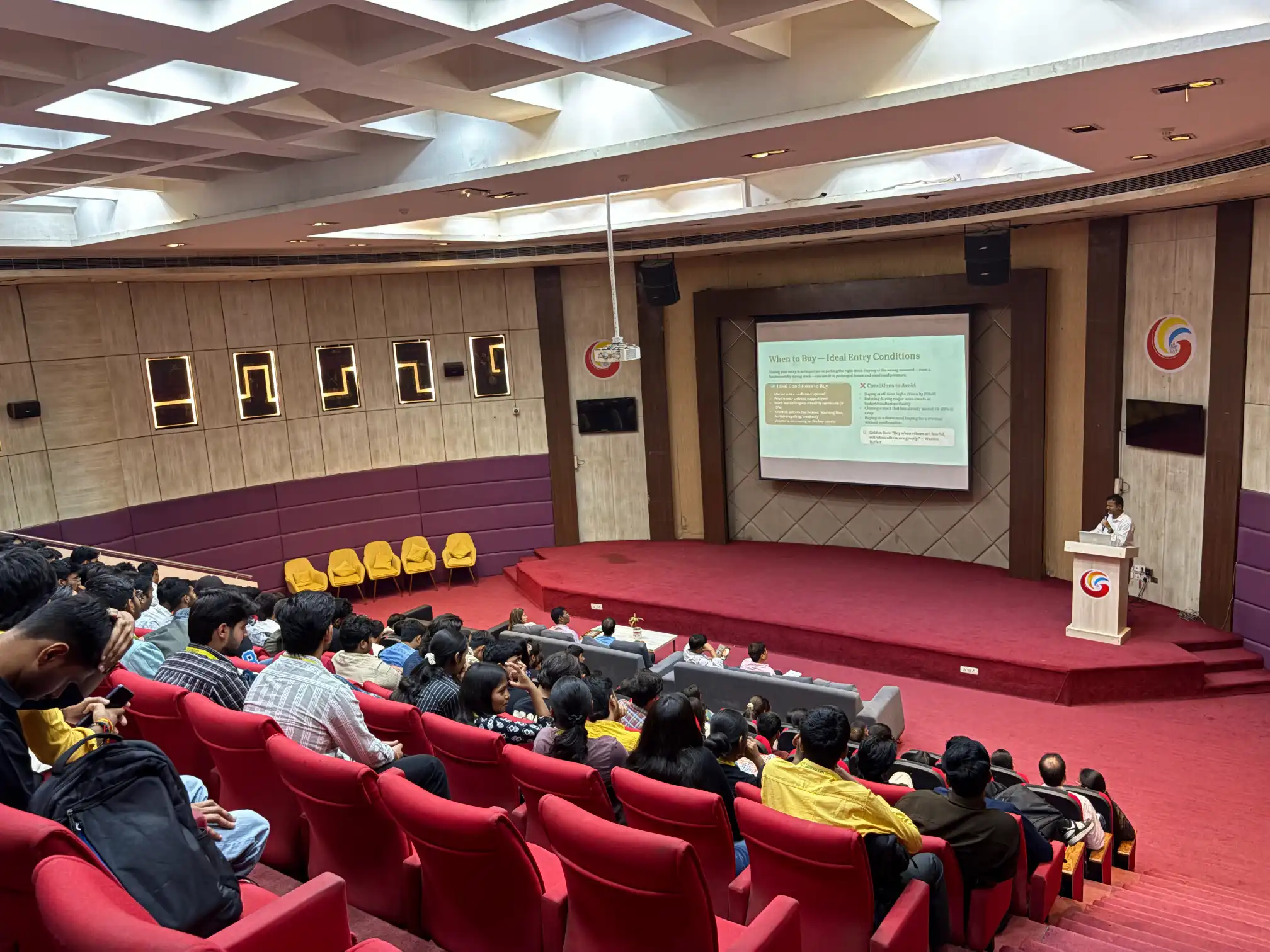
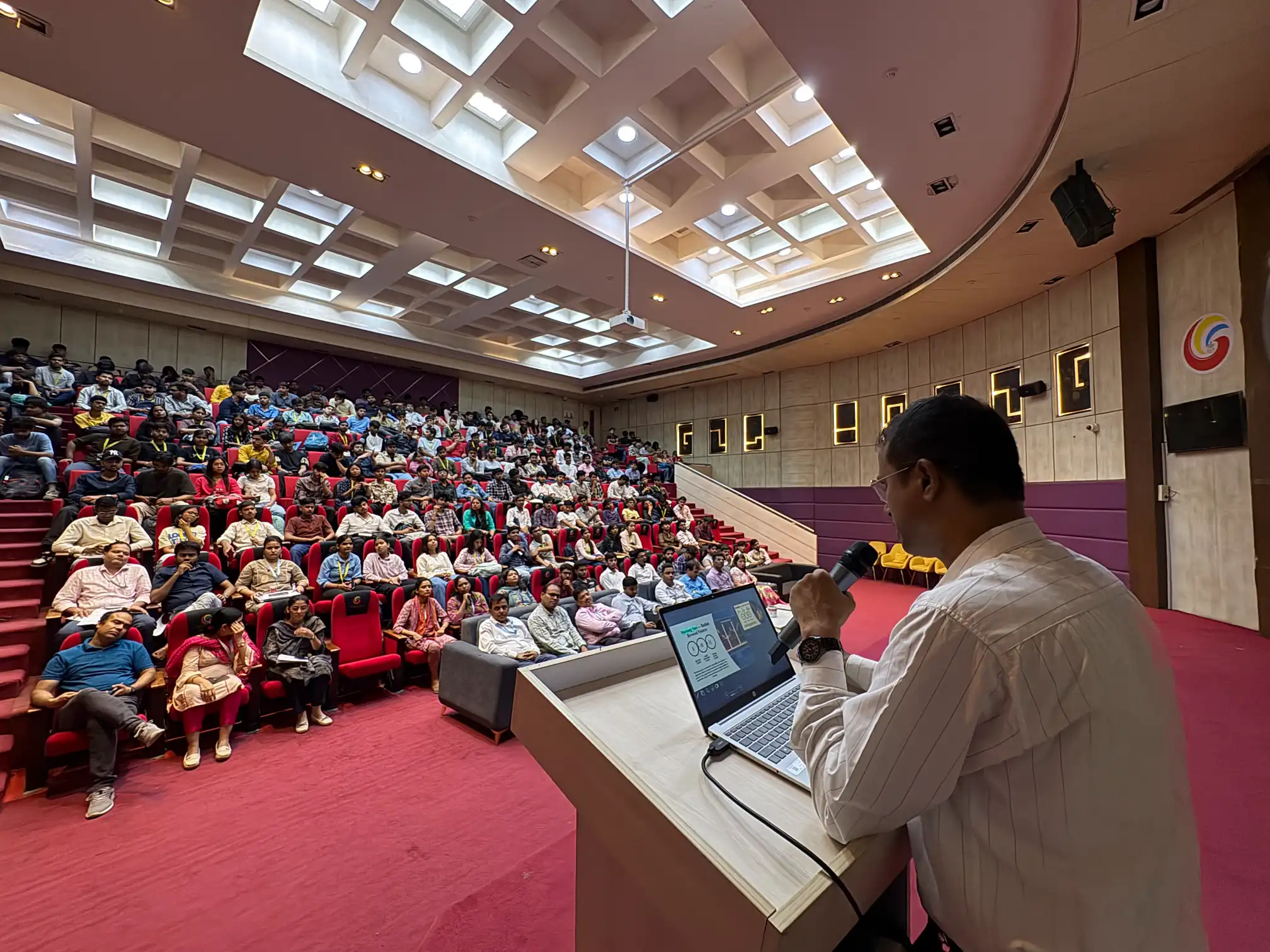
The Department of Applied Sciences and Humanities, Galgotias College of Engineering and Technology (GCET), organized a Guest Lecture on "Quantitative Engineering Approaches to Financial Market Analysis" on 6th April 2026, from 11:30 AM to 01:30 PM at the D-Block Auditorium, GCET Campus, Greater Noida. The lecture was delivered by Dr. Pravat Kr. Behera, Professor at ARSD College, University of Delhi, a distinguished academic with extensive expertise in quantitative methodologies, mathematical finance, and data-driven analytical techniques.
The session was designed to expose students to the application of engineering and mathematical tools in understanding and analyzing modern financial markets. It focused on quantitative methods such as statistical modeling, probability theory, data analysis, and computational techniques that are increasingly being used by professionals in the financial sector to make informed, evidence-based decisions. The event provided students of Applied Sciences with a unique opportunity to see how their foundational knowledge in mathematics, physics, and data analysis translates into real-world applications in one of the most dynamic and impactful industries globally.
Event Detailed Description
The Guest Lecture commenced at 11:30 AM on 6th April 2026 at the D-Block Auditorium, Galgotias College of Engineering and Technology, Greater Noida. The event was organized by the Department of Applied Sciences and Humanities as part of its ongoing efforts to broaden students' academic horizons and connect them with real-world applications of their core subjects.
The session was conducted by Dr. Pravat Kr. Behera, Professor at ARSD College, University of Delhi. Dr. Behera brings with him a wealth of academic and research experience in the fields of quantitative finance, applied mathematics, and statistical analysis. His work bridges the gap between theoretical mathematics and practical financial engineering, making him an ideal speaker to address students of Applied Sciences and Engineering on this interdisciplinary topic.
Dr. Behera opened the lecture with an introduction to financial markets, explaining their structure, functioning, and the challenges involved in predicting market behavior. He emphasized that modern financial markets are deeply complex and data-intensive systems, and that traditional intuitive approaches to investment and financial decision-making are increasingly being replaced by rigorous, quantitative frameworks. He introduced students to the concept of quantitative finance and how engineering graduates are now among the most sought-after professionals in the financial industry, owing to their strong analytical and computational backgrounds.
The lecture then delved into the core quantitative tools used in financial market analysis. Dr. Behera covered statistical distributions and their role in modeling asset price movements, time series analysis for tracking and forecasting market trends, probability theory as the foundation of risk assessment and derivative pricing, and the application of linear algebra and calculus in portfolio optimization. He also introduced students to foundational models such as the Black-Scholes model for option pricing and the concept of stochastic processes in finance, explaining the mathematical underpinnings in an accessible and engaging manner.
A particularly engaging segment of the lecture addressed the role of data science and machine learning in modern financial analysis. Dr. Behera discussed how algorithmic trading, high-frequency trading systems, and AI-powered risk management platforms are now standard tools in the financial industry, and how proficiency in data analysis and programming is increasingly becoming a core competency for finance professionals. Students were introduced to real-world datasets and case studies demonstrating how quantitative models are used to detect market inefficiencies, manage investment portfolios, and mitigate financial risk.
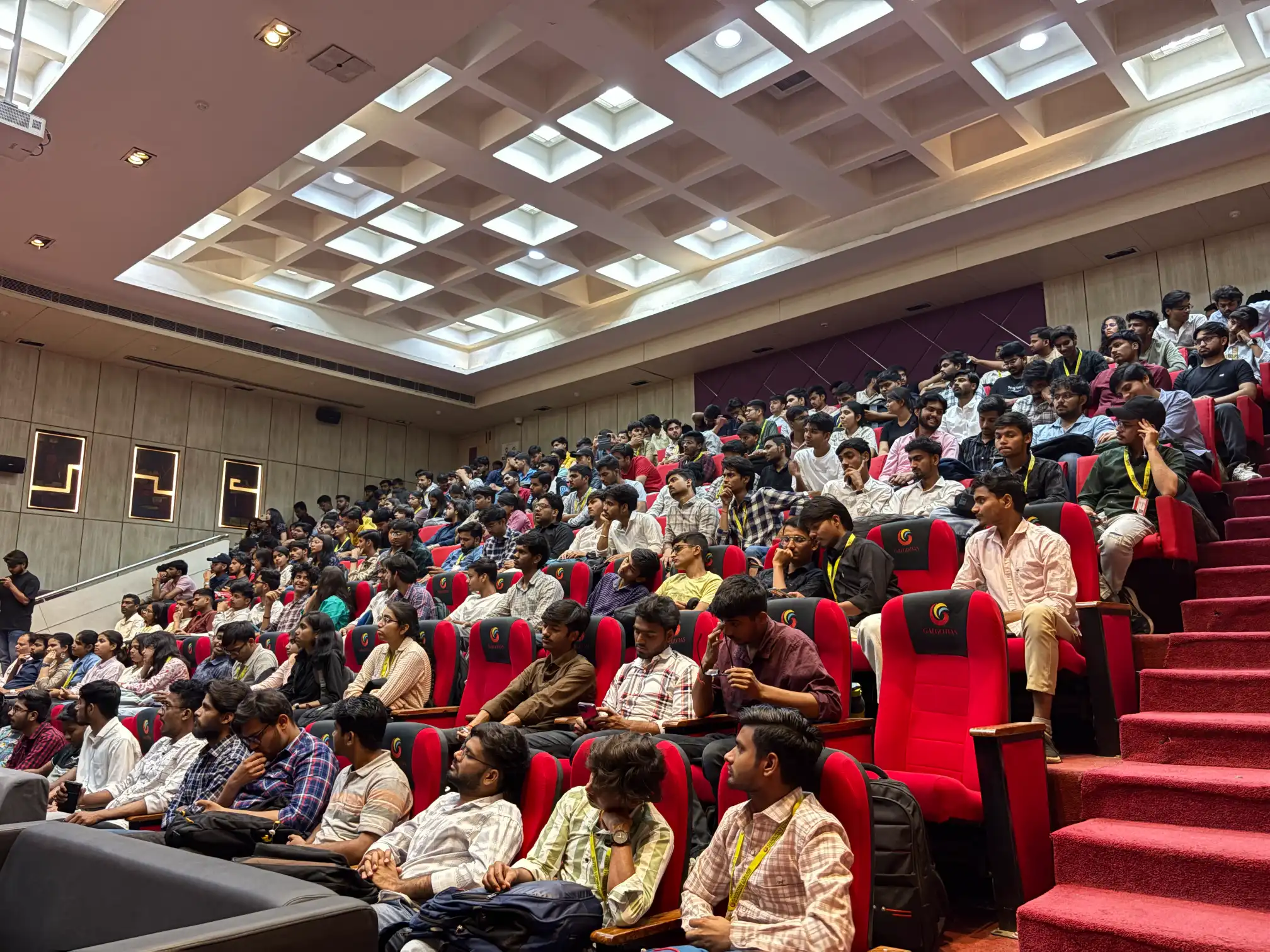
The session concluded with an interactive Q&A in which students raised questions on career pathways in quantitative finance, the relevance of their engineering curriculum to financial roles, recommended certifications such as CFA and FRM, and how to build practical skills through projects and internships. Dr. Behera provided thoughtful and encouraging responses, motivating students to explore quantitative finance as a rewarding career option. The lecture concluded at 01:30 PM with a formal vote of thanks extended to Dr. Pravat Kr. Behera by the Department of Applied Sciences and Humanities for his invaluable contribution to the academic enrichment of GCET students.
Department Name: Department of Applied Sciences and Humanities, GCET
Event Outcome
Interdisciplinary Knowledge Enrichment
Students gained valuable insights into how mathematical and engineering principles such as statistics, probability, calculus, and linear algebra are directly applied in quantitative financial market analysis, helping them appreciate the real-world relevance of their core academic subjects.
Exposure to Quantitative Finance as a Career Path
The lecture introduced students to the growing field of quantitative finance and financial engineering, opening their awareness to career opportunities in investment banking, asset management, algorithmic trading, risk analytics, and financial technology (FinTech).
Understanding of Data-Driven Financial Tools
Students were introduced to foundational quantitative models including the Black-Scholes model, stochastic processes, and time series analysis, along with modern AI and machine learning applications in trading and portfolio management, broadening their technical skill awareness.
Motivation for Cross-Disciplinary Skill Development
Dr. Behera's guidance on certifications such as CFA and FRM, combined with insights on data science skills relevant to finance, inspired students to actively pursue additional qualifications and projects that complement their engineering education.
Strengthened Academia and Industry Connect
The event reinforced GCET's commitment to providing students with exposure to distinguished academics and real-world practitioners, fostering a learning environment that goes beyond textbooks and equips students with knowledge relevant to dynamic global industries.